
Baby Food Charts
7 Month Baby Food Chart: New Textures and More Variety
Ready to expand your 7-month-old's menu? Our complete 7-month baby food chart covers new foods to introduce, texture progression, portion sizes, and a sample daily schedule.

At 7 months, babies typically move from thin first purees to thicker, lumpier textures and small soft finger foods, eating solids two to three times a day. This is a stage of rapid exploration, more flavors, more variety, and the start of self-feeding.
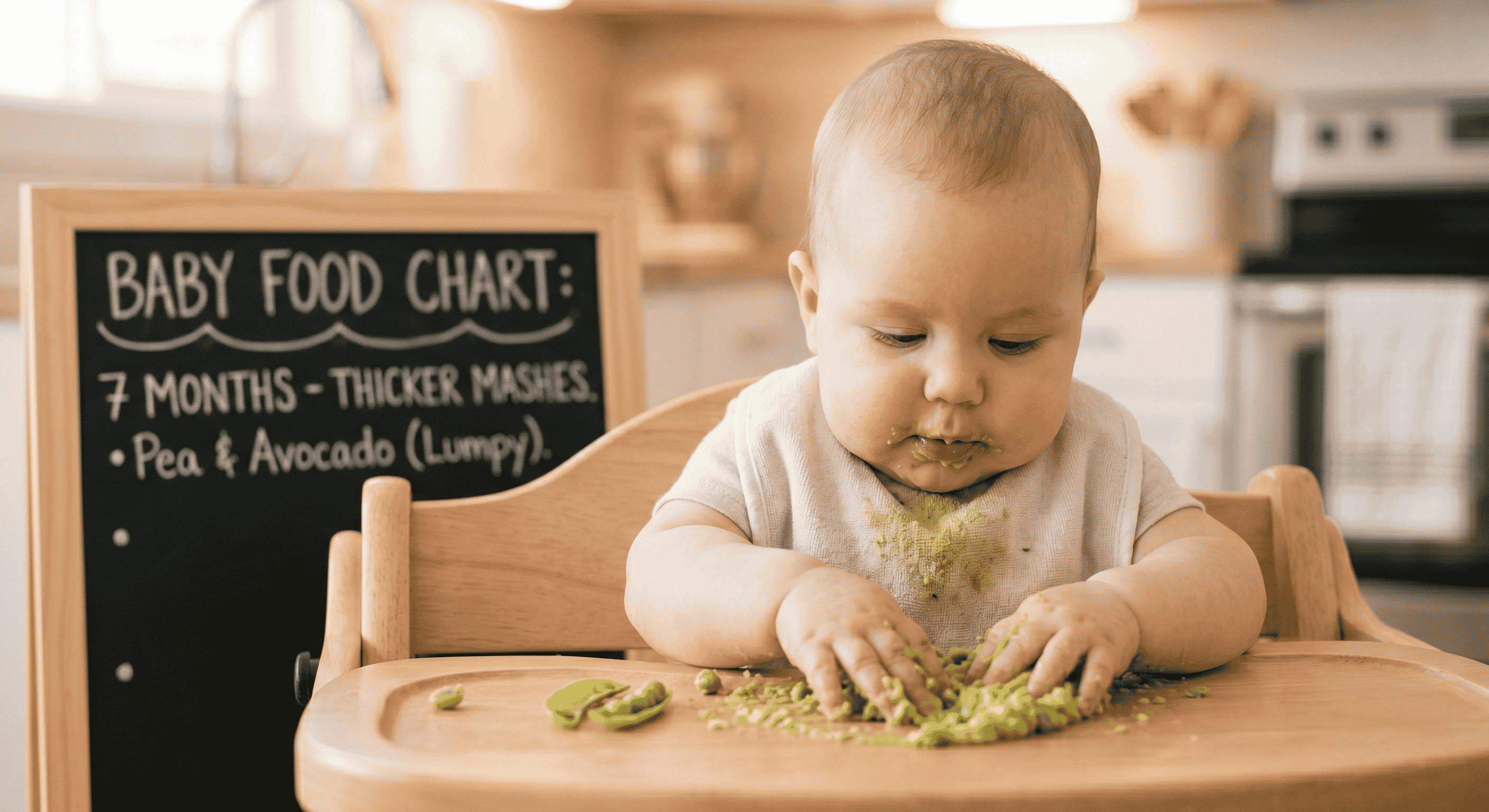
7 Months – Introducing Texture (Lumpy Mashes)
Transitioning to the next stage, we see a slightly older 7-month-old baby, also in a cloth bib and the same high chair. The consistency of the food is visibly changing. Instead of a smooth puree, the baby is actively mashing a thick mixture of green peas and avocado with their fingers. Visible small lumps are present. The cozy kitchen bokeh remains, and the background chalkboard has been updated to read: "BABY FOOD CHART: 7 MONTHS - THICKER MASHES. Pea & Avocado (Lumpy)."
What's new at 7 months
Your baby is likely more skilled at moving food around the mouth and may enjoy holding soft pieces. You can blend flavors (for example sweet potato with a little cinnamon) and offer combinations rather than only single foods.
7 month baby food chart
| Time | Feeding | Example foods | Amount |
|---|---|---|---|
| Morning | Breast milk or formula | - | Full feed |
| Breakfast | Solids | Iron-fortified cereal, mashed banana | 2–4 tbsp |
| Midday | Breast milk or formula | - | Full feed |
| Lunch | Solids | Sweet potato mash, soft lentils | 2–4 tbsp |
| Afternoon | Breast milk or formula | - | Full feed |
| Before bed | Breast milk or formula | - | Full feed |
Keep iron front and center
Iron remains the most important nutrient to plan around. Offer iron-rich foods daily - pureed or finely minced meat, lentils, beans, and fortified cereal, ideally paired with vitamin-C foods like fruit to boost absorption.
Soft finger foods to try
Always supervise meals, seat your baby upright, and learn the difference between gagging (normal) and choking before starting finger foods.
At 7 months, complementary feeding shifts toward greater energy density and variety as solids supply a growing share of nutrition alongside milk. Progressively lumpier textures encourage the oral-motor and chewing skills babies need for family foods. Continuing responsive feeding, letting your baby set the pace and amount, helps maintain healthy self-regulation while iron-rich foods remain a daily focus.
Frequently asked questions
What can a 7 month old eat?
By 7 months many babies handle thicker purees, mashed foods, and soft finger foods. You can combine flavors, offer iron-rich proteins, and introduce more vegetables, fruits, and grains while continuing breast milk or formula.
How many meals should a 7 month old have?
Most 7 month olds eat solids two to three times a day in addition to regular milk feeds. Follow your baby's appetite and keep mealtimes relaxed.
Sources & references
- When, What, and How to Introduce Solid Foods, Centers for Disease Control and Prevention
- Iron, Centers for Disease Control and Prevention
- Feeding your baby: 6–12 months, UNICEF
- Your baby's first solid foods, NHS
BabyFoodCharts Editorial Team
Reviewed against current pediatric feeding guidance
Our editorial team researches and reviews every guide for accuracy and clarity. This content is educational and is not a substitute for advice from your own pediatrician.
Browse these topics
Related articles
Continue reading
Read next8 Month Baby Food Chart: Finger Foods and 3 Meals a DayRecently updated
Note: BabyFoodCharts provides general educational information. It is not medical advice. Consult your pediatrician before introducing new foods, especially common allergens.