
Baby Food Charts
6 Month Baby Food Chart: Best First Foods + Free Printable
Your complete guide to feeding a 6-month-old. Get safe first foods, how much to offer, a sample feeding schedule, and foods to avoid at 6 months. Free printable chart.

Six months is the milestone most pediatric guidance points to for starting solid foods. At 6 months, babies typically begin with small amounts of single-ingredient purees or soft mashed foods while breast milk or formula still provides most of their nutrition. This chart shows what to offer, how much, and how to build a simple routine.
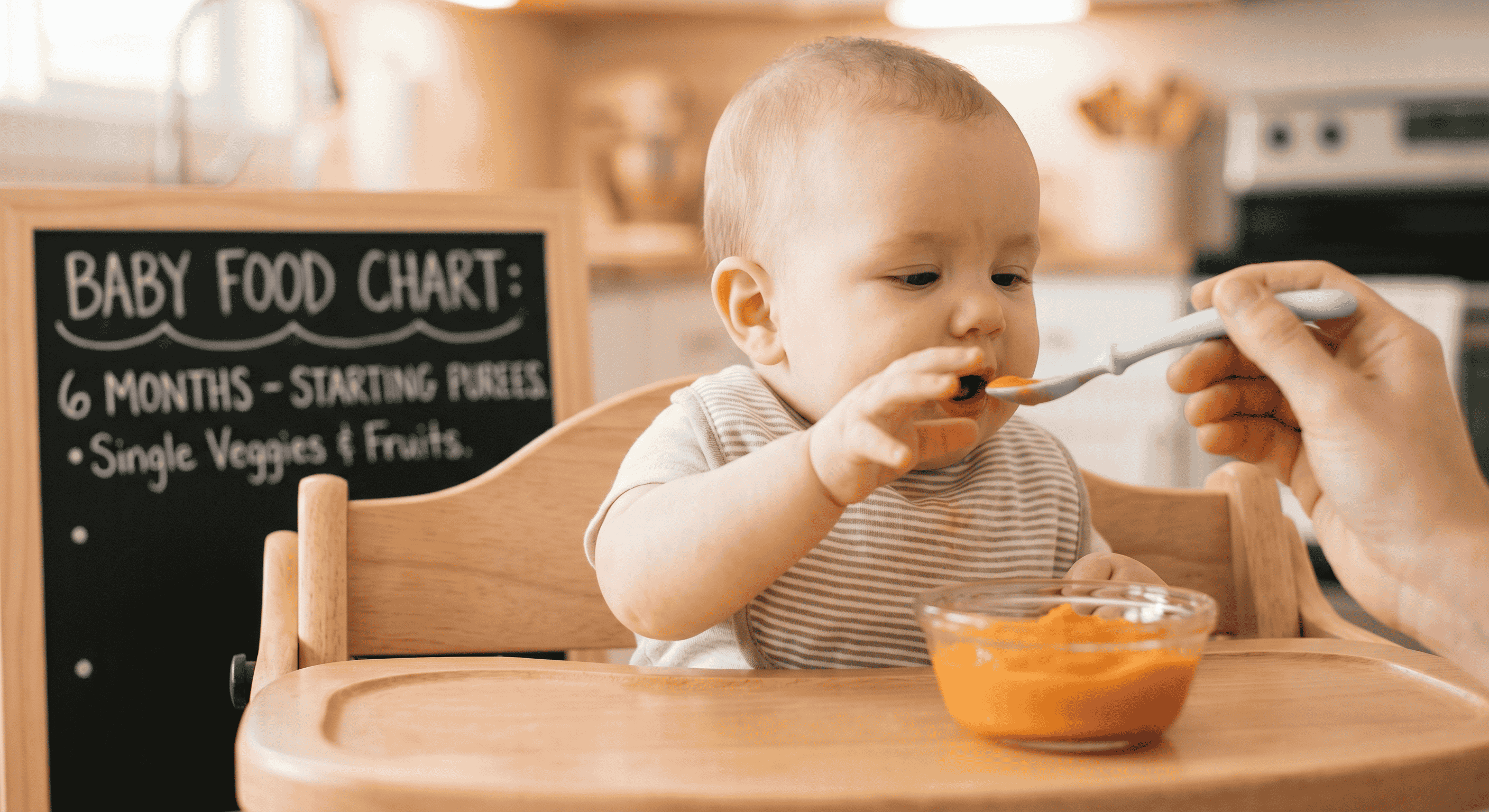
6 Months – Starting Solids (Single Purees)
We begin the journey with a close-up of a chubby 6-month-old seated in a natural wooden high chair. The baby is wearing a simple striped bib and is eagerly reaching for a tiny, soft blue spoon. On the tray is a small glass bowl filled with smooth, bright orange sweet potato puree. This scene sets the tone with warm, diffused lighting and a soft bokeh of a cozy kitchen. The background features a hand-drawn chalkboard reading: "BABY FOOD CHART: 6 MONTHS - STARTING PUREES. Single Veggies & Fruits."
Is your baby ready for solids?
Before following any 6 month food chart, confirm the signs of readiness: your baby can sit upright with minimal support, holds their head steady, brings objects to their mouth, and seems interested when you eat. Starting around this age also matters nutritionally, because a baby's iron stores begin to run low and solids help replace them.
6 month baby food chart
This chart is a starting framework. Every baby is different, follow your baby's hunger and fullness cues rather than forcing amounts.
| Time | Feeding | Example foods | Amount |
|---|---|---|---|
| On waking | Breast milk or formula | - | Full feed |
| Mid-morning | First solids | Iron-fortified cereal, mashed banana | 1–2 tsp |
| Midday | Breast milk or formula | - | Full feed |
| Afternoon | Single-food puree | Avocado, sweet potato | 1–2 tsp |
| Evening | Breast milk or formula | - | Full feed |
| Before bed | Breast milk or formula | - | Full feed |
Best first foods at 6 months
Smooth, single-ingredient foods are easiest to start with. Good options include avocado, banana, and sweet potato, along with iron-rich foods like fortified cereal and well-pureed lentils.
How much to feed
Begin with just 1–2 teaspoons of one food, once a day. Over a few weeks, work up to 2–3 tablespoons at one or two meals. Let your baby decide when they're full, turning the head away or closing the mouth is a clear stop signal.
Foods to avoid at 6 months
- Honey, risk of infant botulism before 12 months.
- Cow's milk as a main drink, not until 12 months (small amounts in cooking are fine).
- Whole nuts, hard raw vegetables, and other choking hazards.
- Added salt and sugar.
Building a simple routine
Keep first meals low-pressure and consistent. Offer solids when your baby is alert and not overly hungry, sit them upright, and expect plenty of mess. Most of their calories still come from milk at this stage, solids are about practice and new flavors.
The aim of complementary feeding at 6 months is to gradually add nutrient- and energy-dense foods alongside milk, with iron and zinc the priority nutrients as birth iron stores taper off. Responsive feeding, offering food in response to hunger cues and respecting fullness, supports healthy appetite regulation from the very first spoonful. Exposing your baby to a range of flavors and textures now also helps build acceptance of a varied diet later.
Frequently asked questions
What can a 6 month old eat?
At 6 months most babies can start single-ingredient purees and soft mashed foods such as avocado, banana, sweet potato, and iron-fortified cereal. Offer one new food at a time and watch for any reaction over 2–3 days.
How much solid food should a 6 month old eat?
Start with 1–2 teaspoons of a single food once a day and build toward 2–3 tablespoons across one or two meals as your baby shows interest. Breast milk or formula remains the main source of nutrition at this age.
How do I know my baby is ready for solids at 6 months?
Signs of readiness include sitting up with little support, good head control, showing interest in food, and the loss of the tongue-thrust reflex that pushes food out of the mouth.
Sources & references
- Starting Solid Foods, American Academy of Pediatrics
- When, What, and How to Introduce Solid Foods, Centers for Disease Control and Prevention
- Iron, Centers for Disease Control and Prevention
- Feeding your baby: 6–12 months, UNICEF
- Infant and young child feeding, World Health Organization
BabyFoodCharts Editorial Team
Reviewed against current pediatric feeding guidance
Our editorial team researches and reviews every guide for accuracy and clarity. This content is educational and is not a substitute for advice from your own pediatrician.
Browse these topics
Related articles
Continue reading
Read next7 Month Baby Food Chart: New Textures and More VarietyRecently updated
Note: BabyFoodCharts provides general educational information. It is not medical advice. Consult your pediatrician before introducing new foods, especially common allergens.