
Feeding Schedules
Baby Food Portion Sizes by Age: How Much Should Baby Eat?
Wondering how much solid food to give your baby? Our portion size guide covers every age from 6 to 12 months with tablespoon measurements and sample meal amounts.
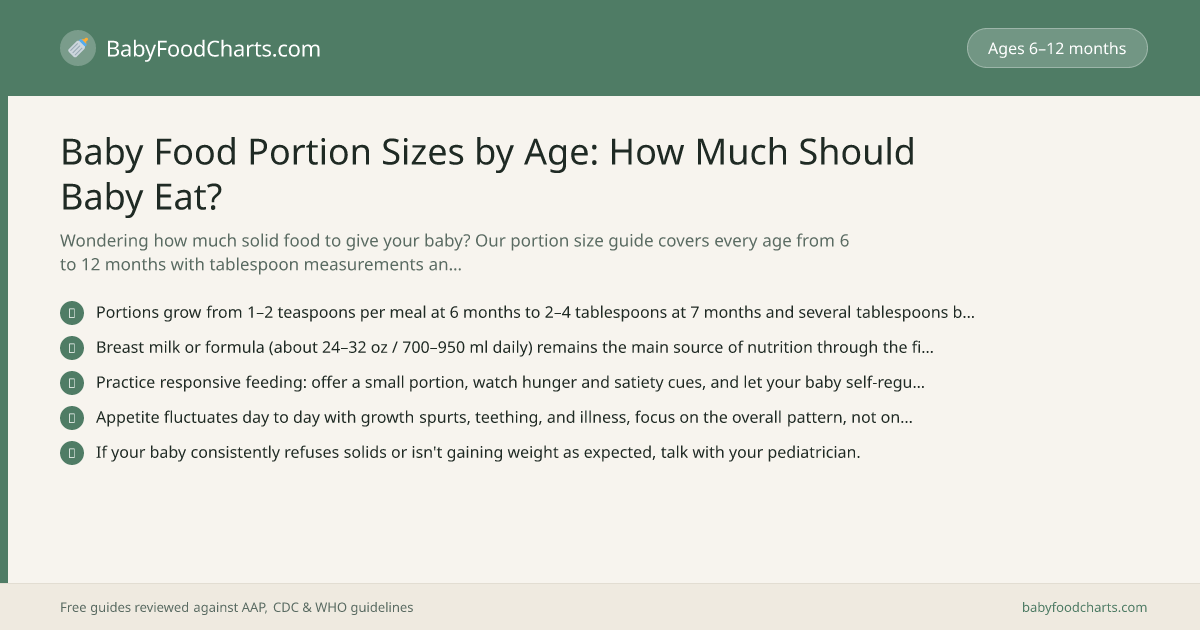

Baby portion sizes grow gradually from a teaspoon or two at 6 months to child-sized servings by 12 months, but the best guide is always your baby's hunger and fullness cues. Use these ranges as a starting point, not a target to hit.
Portion sizes by age
| Age | Per meal | Meals/day |
|---|---|---|
| 6 months | 1–2 tsp, building up | 1–2 |
| 7 months | 2–4 tbsp | 2 |
| 8 months | 4–6 tbsp | 3 |
| 9–10 months | 4–8 tbsp | 3 + snacks |
| 11–12 months | Child-sized portions | 3 + 2 snacks |
Reading your baby's cues
Babies are good at self-regulating. Offer food and let them decide how much to eat. Forcing extra bites or finishing a set amount can override their natural appetite.
This is the heart of responsive feeding: you decide what is offered and when, while your baby decides how much. Reading hunger and satiety cues, leaning in and opening the mouth versus turning away, closing the lips, or slowing down, supports your baby's natural self-regulation of intake and helps prevent over- or under-feeding.
Why amounts vary
Appetite changes with growth spurts, teething, illness, and activity. A smaller day followed by a hungrier day is completely normal. Focus on the overall pattern, not a single meal.
When to check with your pediatrician
If your baby consistently refuses solids, isn't gaining weight as expected, or you have concerns about intake, talk with your pediatrician for personalized guidance.
Frequently asked questions
How much solid food should a baby eat by age?
Amounts grow from 1–2 teaspoons at 6 months to several tablespoons per meal by 8–9 months and child-sized portions by 12 months. These are starting points, let your baby's appetite lead.
How do I know if my baby has eaten enough?
Watch for fullness cues: turning the head away, closing the mouth, slowing down, or losing interest. A baby who is growing well and has regular wet diapers is usually getting enough.
Sources & references
- How Much and How Often to Feed Your Baby, Centers for Disease Control and Prevention
- Starting Solid Foods, American Academy of Pediatrics
- Feeding your baby: 6–12 months, UNICEF
BabyFoodCharts Editorial Team
Reviewed against current pediatric feeding guidance
Our editorial team researches and reviews every guide for accuracy and clarity. This content is educational and is not a substitute for advice from your own pediatrician.
Browse these topics
Related articles
Continue reading
Read next6 to 8 Month Weekly Feeding Plan: 7 Days of Meal IdeasRecently updated
Note: BabyFoodCharts provides general educational information. It is not medical advice. Consult your pediatrician before introducing new foods, especially common allergens.