
Toddler Feeding Guides
12 Month Toddler Food Chart: First Birthday Feeding Guide + Free Printable
Complete 12-month toddler food chart with safe foods, portion sizes, daily schedule, and what changes at the first birthday. Reviewed against AAP guidelines.
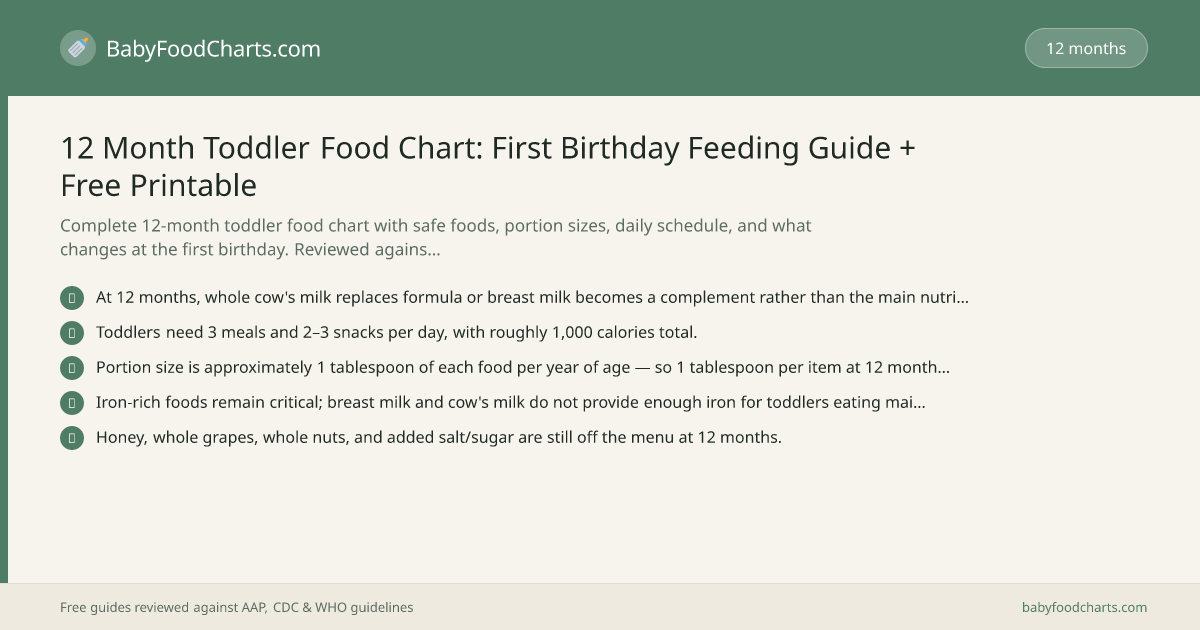

The first birthday is a pivotal moment in your baby's nutritional journey. At 12 months, the feeding paradigm shifts: whole cow's milk replaces formula, the range of safe foods expands dramatically, and your child's growing independence at mealtimes becomes something to celebrate rather than contain. This food chart walks you through exactly what to offer, how much, at what times, and what still needs to stay off the plate.
What changes at 12 months
The one-year mark brings several simultaneous changes that make feeding feel like a fresh start. First, breast milk or formula transitions from primary nutrition source to complement. Formula is no longer needed for full-term healthy babies; whole cow's milk provides the fat, calcium, and protein now required. Breast milk remains beneficial and can continue as long as you and your toddler wish.
Second, the variety of safe foods expands significantly. Honey can now be introduced. The texture goal shifts from soft lumps and mashable pieces to most family foods modified to toddler-safe sizes. Hard raw vegetables, whole grapes, whole nuts, and large chunks still pose choking risks, but your toddler's oral motor skills have developed enough to handle a much wider range of textures than they could at six months.
Third, appetite becomes unpredictable. Growth slows dramatically after the first birthday — your baby may have tripled their birth weight in 12 months, but over the next 12 months they'll only gain about 4–5 pounds. Slower growth means genuinely smaller appetites. Expect day-to-day variation and trust your toddler's hunger cues.
Key nutritional priorities at 12 months
Iron tops the list. Toddlers aged 1–3 need 7 mg of iron per day, and cow's milk does not provide it. Prioritise iron-rich foods at every meal: meat, poultry, fish, eggs, lentils, beans, tofu, and iron-fortified cereals. Pair them with vitamin C sources (tomato, orange, capsicum, strawberry) to increase absorption by up to three times.
Calcium and vitamin D support the rapid bone growth happening through toddlerhood. Whole milk and dairy foods provide calcium; vitamin D requires either fatty fish, fortified milk, or a supplement. The AAP recommends 600 IU of vitamin D per day if dietary sources are insufficient.
Omega-3 fatty acids (DHA and AHA) continue supporting the brain development that is still proceeding at an extraordinary rate through the toddler years. Offer oily fish (salmon, sardines, trout) twice weekly.
12 month toddler food chart
Use this as a starting framework. Every toddler is different — portion amounts, timing, and food preferences all vary. The goal is offering a variety across all food groups each day, not perfection at every meal.
| Time | Feeding | Example foods | Portion |
|---|---|---|---|
| 7:00 am | Breakfast | Scrambled egg, toast fingers with nut butter, halved blueberries | 1–2 tbsp each item |
| 9:30 am | Morning snack | Full-fat yogurt or soft fruit pieces | 2–3 tbsp |
| 12:00 pm | Lunch | Soft pasta with meat sauce, steamed broccoli, water | 2–3 tbsp each item |
| 3:00 pm | Afternoon snack | Cheese cubes, cucumber spears (soft-cooked), whole milk | 2–3 tbsp |
| 5:30 pm | Dinner | Shredded chicken, mashed sweet potato, pea puree or soft peas | 2–4 tbsp each item |
| 7:00 pm | Bedtime milk | Whole cow's milk or breastfeed | 4–6 oz milk |
Best foods for a 12-month-old
Protein foods
Protein supports muscle development and provides iron, zinc, and B vitamins. At 12 months, offer protein at every meal.
Excellent protein choices:
- Scrambled, hard-boiled, or soft-poached egg
- Shredded or minced chicken or turkey
- Flaked salmon or other low-mercury fish
- Well-cooked and mashed lentils or black beans
- Soft tofu cubes
- Full-fat Greek yogurt
- Soft cheese (cheddar, mozzarella, cottage cheese)
- Thinly spread peanut butter or almond butter on toast
Egg is one of the most nutrient-complete foods a toddler can eat, providing choline (critical for brain development), selenium, and high-quality protein. If egg was not introduced during the baby months, now is an excellent time.
Grains and carbohydrates
Carbohydrates fuel the high energy demands of a toddler who is (or is about to be) walking. Choose whole grain options where possible for added fibre, B vitamins, and iron.
- Soft-cooked pasta (regular or whole wheat)
- Iron-fortified baby or toddler oatmeal
- Whole grain toast or bread cut into strips
- Soft-cooked rice or quinoa
- Pancakes made with oat flour or banana
- Puffed whole grain cereals (low sugar)
Avoid high-sugar cereals and sweetened baked goods, which provide empty calories and establish sweet preferences.
Vegetables
Vegetables provide vitamins, minerals, fibre, and the flavour variety that prevents picky eating later. At 12 months, all vegetables should be cooked to a soft consistency or served very ripe.
Top vegetables for 12-month-olds:
- Sweet potato (steamed or roasted until soft)
- Broccoli florets (steamed, easy for little fingers to hold)
- Soft-cooked peas
- Roasted butternut squash
- Cooked carrot sticks
- Steamed green beans cut into small pieces
- Soft-cooked spinach mixed into pasta or eggs
- Avocado (naturally soft, excellent source of healthy fats)
Keep offering vegetables even if rejected. Research shows toddlers need 8–15 exposures to a new food before accepting it. Serve without pressure.
Fruits
Fruit provides natural sweetness, vitamin C, and fibre. The natural sugars in whole fruit are not a concern the way added sugars in processed foods are, because the fibre slows absorption.
- Ripe banana (whole or cut into coins)
- Quartered grapes or whole blueberries
- Soft ripe mango pieces
- Cooked apple slices
- Ripe peach or nectarine (skin removed)
- Quartered strawberries
- Soft-cooked pear
Always cut round fruits into quarters to eliminate the cylindrical shape that poses a choking risk.
Dairy
Whole cow's milk provides calcium, fat, and protein. Dairy fat is important for brain development through age 2 — do not switch to reduced-fat options until after the second birthday without a pediatrician's recommendation.
- Whole cow's milk (16–24 oz per day maximum)
- Full-fat yogurt
- Soft cheese (cheddar, mozzarella, brie)
- Cottage cheese
How much should a 12-month-old eat?
Total calorie needs at 12 months are approximately 1,000 calories per day. This sounds like a lot but spreads easily across three meals and two to three snacks. A sample day might look like this:
- Breakfast: 250–300 calories
- Morning snack: 100 calories
- Lunch: 250–300 calories
- Afternoon snack: 100 calories
- Dinner: 250–300 calories
Keep in mind that appetite varies significantly day to day. Some days your toddler will seem ravenous; others they will take two bites and lose interest. Both are normal. Forcing food or using praise and bribes to get toddlers to eat more interferes with their natural hunger regulation — a skill that protects them from overeating throughout life.
Portion size by food group
| Food group | Servings per day | 1 serving example |
|---|---|---|
| Grains | 3–4 | 1/4 slice toast, 2 tbsp cooked pasta or oatmeal |
| Vegetables | 2–3 | 1–2 tbsp soft-cooked vegetables |
| Fruit | 2–3 | 1–2 tbsp soft fruit or 1/4 banana |
| Protein (meat/fish/egg/legume) | 2 | 1–2 tbsp minced meat or 1/4 egg |
| Dairy | 2–3 | 4 oz whole milk, 2 tbsp yogurt, 1/2 oz cheese |
| Healthy fats | At most meals | 1 tsp nut butter, 1/4 avocado, drizzle of olive oil |
Foods to avoid at 12 months
The list of foods to avoid shrinks significantly at the first birthday, but some items remain unsafe.
Still avoid:
- Whole grapes, whole cherry tomatoes, whole blueberries (cut into quarters)
- Whole nuts and large nut pieces (choking hazard until age 4; smooth nut butters are fine)
- Hard raw vegetables (carrot sticks, celery sticks — steam or roast until soft)
- Large chunks of meat or firm cheese
- Popcorn (until at least age 4)
- Hot dogs or processed meat sausage in rounds (if offered, cut into strips)
- Added salt (toddler kidneys are still developing — use herbs and spices instead)
- Added sugar and artificial sweeteners
- Fruit juice (limit to 4 oz per day max, ideally avoid entirely)
- Caffeinated drinks
- Unpasteurised dairy products
Newly safe at 12 months:
- Honey (in small amounts, not as a primary sweetener)
- Whole cow's milk as a main drink
- Shellfish (watch for allergy)
Transitioning from formula to whole milk
The switch from formula to whole milk does not need to happen on the exact birthday. A gradual transition over 1–2 weeks prevents digestive upset and taste rejection.
Week 1: Mix 75% formula with 25% whole milk Week 2: Mix 50% formula with 50% whole milk Week 3: Mix 25% formula with 75% whole milk Week 4: Offer whole milk only
Some toddlers accept the switch immediately. If your toddler refuses milk outright, try offering it warm (body temperature), in a sippy cup rather than bottle, or mixed into oatmeal or smoothies while you continue the gradual transition.
If you are continuing to breastfeed past 12 months, there is no nutritional need to introduce cow's milk — breast milk continues to provide valuable nutrition. Discuss with your healthcare provider if needed.
Moving from bottle to cup
The AAP recommends weaning from the bottle by 12–18 months. Prolonged bottle use (especially sippy cups used as pacifiers throughout the day with milk) is associated with dental caries and iron deficiency.
Introduce an open cup or 360-degree cup at meals from around 12 months. Expect spills. Let your toddler practice. By 15–18 months, most toddlers can manage most of their drinking from a cup.
Building positive mealtime habits at 12 months
The habits established now influence eating behaviour through childhood and adolescence.
What works:
- Eat together as a family at the table whenever possible
- Offer the same foods you eat, modified for safety
- Maintain a calm, neutral tone when your toddler refuses food
- Allow self-feeding with a spoon and hands — it is messy and essential
- Keep mealtimes to 20–30 minutes; remove the plate after this without comment
What backfires:
- Bribing with dessert ("eat your vegetables and you can have ice cream")
- Hiding vegetables in other foods (teaches nothing about the vegetable itself)
- Forcing bites or using distraction feeding
- Making separate "toddler meals" from scratch for every rejection
The goal is a child who trusts their hunger and fullness, is exposed to a wide variety of foods, and associates mealtimes with calm family connection rather than battle.
Sample 12-month weekly meal variety guide
Aim to rotate through these categories each week rather than serving identical meals:
Breakfast rotation:
- Scrambled egg with toast
- Baby oatmeal with banana and nut butter
- Whole grain pancakes with soft fruit
- Yogurt with blueberries and iron-fortified cereal
Lunch rotation:
- Soft pasta with meat or vegetable sauce
- Lentil soup with bread
- Salmon flakes with soft-cooked broccoli and rice
- Chicken and avocado on toast strips
Dinner rotation:
- Shredded beef or chicken with sweet potato and peas
- Fish with roasted squash and soft green beans
- Egg fried rice with soft vegetables
- Lentil dal with soft-cooked cauliflower
Snack rotation:
- Cheese and soft fruit
- Yogurt with oat cereal
- Nut butter on toast strips
- Avocado with rice crackers
When to talk to your pediatrician
Discuss feeding at the 12-month well visit. Bring up concerns about:
- Refusal of entire food groups (especially protein or iron-rich foods)
- No interest in self-feeding or cup drinking by 14–15 months
- Gagging or vomiting frequently at meals
- Dropping more than two percentile lines on the growth chart
- Extreme selectivity (eating fewer than 10 foods total)
Iron levels are often checked at the 12-month visit via a finger prick test. Ask your provider about this, particularly if your toddler drinks more than 24 oz of milk per day or eats very little meat.
The 12-month mark is the beginning of the toddler feeding journey, not the end. The expanded variety of safe foods, the social joy of family meals, and the gradual development of mealtime independence make this one of the most rewarding phases to navigate with patience and curiosity.
Frequently asked questions
What should a 12-month-old be eating?
A 12-month-old can eat most soft family foods modified to safe sizes. They need 3 meals and 2–3 snacks covering all food groups — protein, dairy, grains, fruits, and vegetables. Whole milk replaces formula at this age; breast milk can continue alongside solids.
How much milk should a 12-month-old drink?
At 12 months, offer 16–24 oz of whole cow's milk per day. More than 24 oz displaces iron-rich solid foods and increases the risk of iron deficiency. Limit milk to meals and one or two snack times rather than offering it continuously.
Can a 12-month-old eat eggs, peanut butter, and cheese?
Yes, all three are safe and nutritious at 12 months. Scrambled egg, thinly spread peanut butter on toast, and soft cheese cubes are excellent protein and fat sources. If allergens were not introduced earlier, introduce one at a time and watch for reactions.
What finger foods are safe at 12 months?
Safe finger foods at 12 months include soft-cooked pasta, ripe banana pieces, steamed broccoli florets, shredded chicken, soft cheese cubes, scrambled egg, cooked lentils, soft-cooked carrot pieces, and quartered blueberries or grapes.
Should I switch from formula to milk at exactly 12 months?
The transition from formula to whole milk is recommended at 12 months but does not need to happen overnight. Mix formula with whole milk over 1–2 weeks to ease the taste change. If breastfeeding, continue as long as works for you and your toddler.
Is honey safe for a 12-month-old?
No. Honey remains unsafe until 12 months completed — meaning not until after the first birthday. The risk of infant botulism from honey's Clostridium botulinum spores remains until the digestive tract matures beyond the 12-month mark.
Sources & references
- Infant Food and Feeding, American Academy of Pediatrics
- Toddler: 12–24 Months, Centers for Disease Control and Prevention
- Feeding Your Baby: 6–12 Months, UNICEF
- Complementary Feeding, World Health Organization
- Cow's Milk and Milk Alternatives, HealthyChildren.org — AAP
BabyFoodCharts Editorial Team
Reviewed against current pediatric feeding guidance
Our editorial team researches and reviews every guide for accuracy and clarity. This content is educational and is not a substitute for advice from your own pediatrician.
Browse these topics
Related articles
Continue reading
Read next18 Month Toddler Food Chart: Meals, Portions & Daily ScheduleRecently updated
Note: BabyFoodCharts provides general educational information. It is not medical advice. Consult your pediatrician before introducing new foods, especially common allergens.