
Nutrition Guides
Iron-Rich Foods for Babies: Why Iron Matters and Best Sources
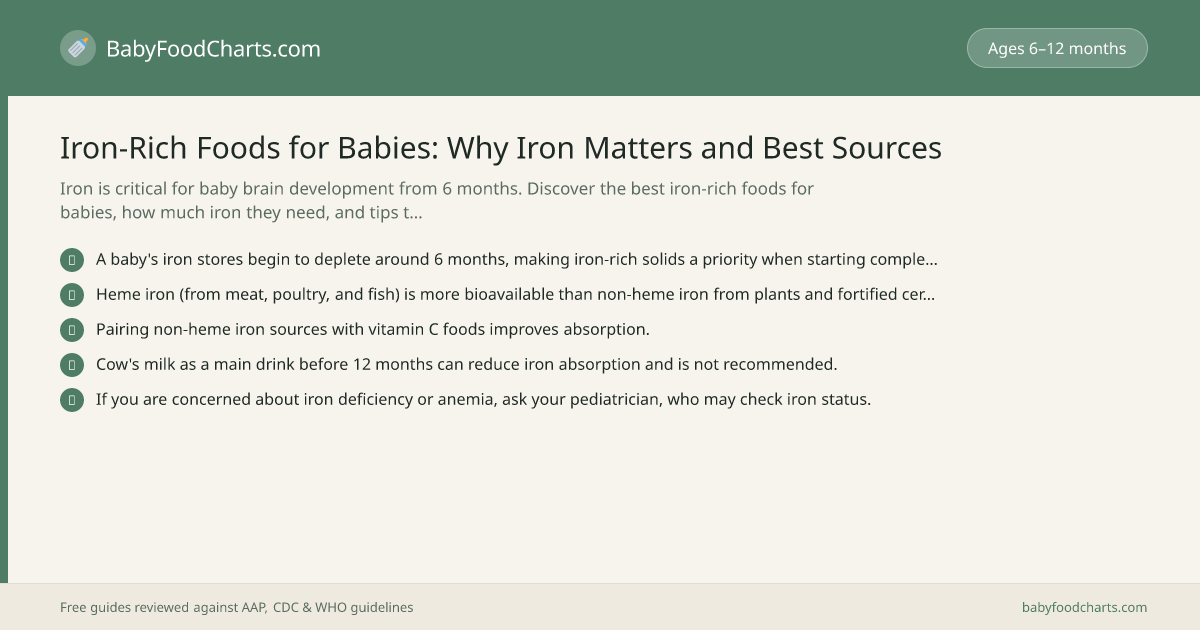
Iron is critical for baby brain development from 6 months. Discover the best iron-rich foods for babies, how much iron they need, and tips to maximize absorption at every meal.

Iron is the single most important nutrient to plan for when babies start solids, because the iron stores they're born with begin running low around 6 months. Building iron-rich foods into daily meals supports growth and brain development.
Why iron matters so much
By about 6 months, a baby's natural iron reserves decline and breast milk provides relatively little iron. Without enough dietary iron, babies can develop iron-deficiency anemia, which can affect development. This is why iron-rich first foods are a priority.
Best iron-rich foods for babies
| Food | Type | How to serve |
|---|---|---|
| Pureed/minced meat | Heme iron | Smooth puree, then finely minced |
| Iron-fortified cereal | Non-heme | Mixed with breast milk or formula |
| Lentils and beans | Non-heme | Well-cooked and mashed |
| Tofu | Non-heme | Mashed or soft cubes |
Boosting iron absorption
Pairing iron-rich foods with vitamin C helps the body absorb non-heme iron from plants. Offer fruits or vegetables alongside meals, for example, lentils with a little mashed sweet potato or fruit.
Not all dietary iron is absorbed the same way. Heme iron, found in meat, poultry, and fish, has higher bioavailability and is absorbed more readily than the non-heme iron in plants, legumes, and iron-fortified cereals. Because non-heme iron is more sensitive to what else is on the plate, serving it alongside a vitamin-C food enhances absorption, while large amounts of cow's milk can hinder it. Offering both heme and non-heme sources across the week is a practical way to support healthy iron intake.
Foods that can hinder iron
Large amounts of cow's milk before 12 months can reduce iron absorption and isn't recommended as a main drink. Keep the focus on iron-rich solids and continued breast milk or formula.
Iron should feature in your baby's daily 6 month and 7 month feeding plans from the very start of solids.
Frequently asked questions
Why do babies need iron at 6 months?
Babies are born with iron stores that begin to deplete around 6 months. Since breast milk is low in iron, iron-rich solids become important at this stage to support growth, brain development, and healthy red blood cells.
What are the best iron-rich foods for babies?
Top options include pureed or minced meat, iron-fortified infant cereal, lentils, beans, and tofu. Pair them with vitamin-C foods like fruit or vegetables to improve iron absorption.
Sources & references
- Iron, Centers for Disease Control and Prevention
- Infant and young child feeding, World Health Organization
BabyFoodCharts Editorial Team
Reviewed against current pediatric feeding guidance
Our editorial team researches and reviews every guide for accuracy and clarity. This content is educational and is not a substitute for advice from your own pediatrician.
Browse these topics
Related articles
Continue reading
Read nextOmega-3 for Babies: Brain-Boosting Fats and Best Food SourcesRecently updated
Note: BabyFoodCharts provides general educational information. It is not medical advice. Consult your pediatrician before introducing new foods, especially common allergens.