
Feeding Schedules
How Often to Feed Baby: Feeding Frequency Guide by Age
Not sure how often to feed your baby? Our complete feeding frequency guide covers newborns to 12 months with formula amounts, breastfeeding frequency, and when to add solids.
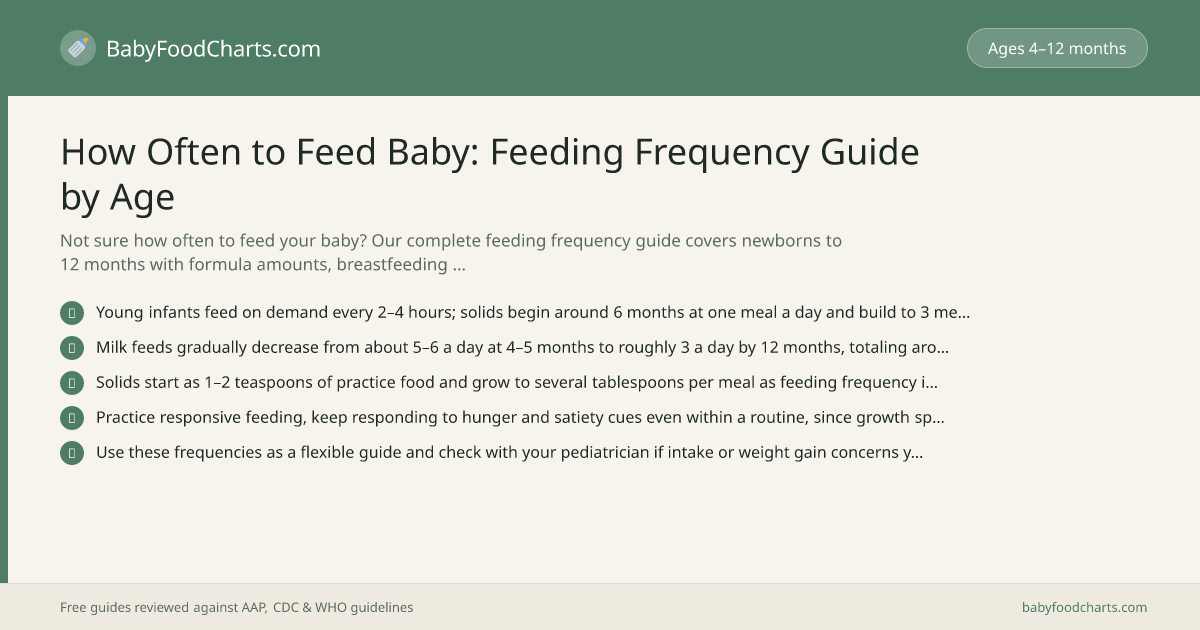

Feeding frequency shifts steadily from frequent milk feeds in early infancy to three meals plus snacks by the first birthday, with solids gradually taking on a larger role. This guide shows the typical balance at each stage.
Feeding frequency by age
| Age | Milk feeds/day | Solid meals/day |
|---|---|---|
| 4–5 months | 5–6 | 0 (not yet) |
| 6 months | 4–6 | 1, building to 2 |
| 7 months | 4–5 | 2 |
| 8 months | 3–4 | 3 |
| 9–10 months | 3–4 | 3 + 1–2 snacks |
| 11–12 months | 3 | 3 + 2 snacks |
How the balance shifts
In the early months, milk is everything. As solids begin, they start as practice and gradually become a real source of nutrition. By 12 months, food provides much of your baby's energy and nutrients, with milk continuing as part of the diet.
Frequency works best as a flexible framework rather than a fixed clock. Responsive feeding means letting your baby's hunger and satiety cues set the pace within that routine, some days bring more milk feeds, others more solids. Honoring this supports your baby's self-regulation of intake, so resist pushing extra feeds your baby is signaling they don't want.
Signs your baby is ready for more meals
Finishing meals eagerly, watching others eat, and staying interested through a feed are all signs your baby may be ready to add another meal or snack.
Keeping it flexible
Every baby is different. Use these frequencies as a guide and adjust to your baby's appetite, sleep, and routine.
Frequently asked questions
How often should I feed my baby?
Newborns and young infants feed on demand every 2–4 hours. As solids begin around 6 months, babies move from one small meal to three meals plus snacks by 9–12 months, while milk feeds gradually decrease.
How many times a day should a baby eat solids?
Solids typically start at once a day around 6 months, increase to two meals by 7 months, three meals by 8 months, and three meals plus one to two snacks by 9–12 months.
Sources & references
- How Much and How Often to Feed Your Baby, Centers for Disease Control and Prevention
- Feeding your baby: 6–12 months, UNICEF
- Starting Solid Foods, American Academy of Pediatrics
BabyFoodCharts Editorial Team
Reviewed against current pediatric feeding guidance
Our editorial team researches and reviews every guide for accuracy and clarity. This content is educational and is not a substitute for advice from your own pediatrician.
Browse these topics
Related articles
Continue reading
Read nextBaby Food Portion Sizes by Age: How Much Should Baby Eat?Recently updated
Note: BabyFoodCharts provides general educational information. It is not medical advice. Consult your pediatrician before introducing new foods, especially common allergens.